What you Looking For?

There are many variations of passages of Lorem Ipsum available, but the majority have suffered alteration in some form, by injected humour.

Consulting Services

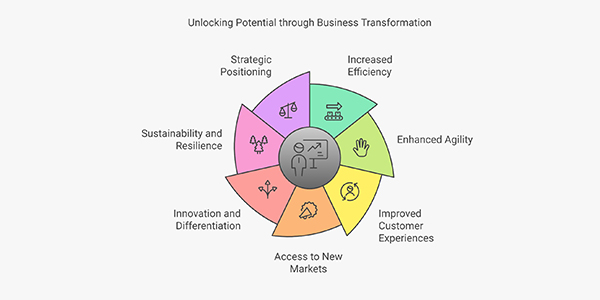
We specialize in the manifestation of Business Transformation for Enterprises leading to increased efficiency, enhanced agility, improved customer experiences. Through the Business Transformation we facilitate Enterprises to grow in markets, harness innovation, address sustainability demands and develop a strong competitive advantage. Apart from Business Transformation we also offer Function Specific Advisory and Facilitation Services. In both services, we first interact with the client and assess the current state of business practices & performance. We apprise the client about improvement opportunities and our facilitation approach for realizing the same. On getting a ‘buy-in’ from the client, we start the engagement in the form of analysis, developing the solution and facilitating the deployment.

Impact On Economy Considerations for SMEs

As of mid-2022, the number of small & medium enterprises in the UAE was 557,000. SMEs contribute as much as 63.5 per cent to the non-oil GDP. It is forecasted that there will be 1 million SMEs in the UAE by the year 2030. SMEs represent more than 94 percent of companies operating in the country, ably providing jobs to more than 86 percent of private sector’s workforce.

Challenges & Constraints

Resources: SMEs often have resources crunch such as finance, manpower, and expertise available to support transformation initiatives, making it challenging to invest in new technologies, training programs, and recruit specialists.

Change: Employees and stakeholders may need to gear up for change due to fear of the unknown, concerns about job security, or new processes or technologies, hindering the implementation of transformation initiatives.

Business Transformation

In today’s rapidly evolving business landscape, staying ahead of the competition requires more than just maintaining the status quo. It demands continuous adaptation and improvement. Business transformation is the strategic process of reimagining and reinventing various aspects of a company’s operations to achieve excellence and drive sustainable growth

Benefits of Business Transformation

Small and medium enterprises (SMEs) are the backbone of many economies, driving innovation, creating jobs, and fostering economic growth. However, in an increasingly competitive marketplace, SMEs face numerous challenges that can hinder their ability to thrive and succeed. Business transformation offers a strategic pathway for SMEs to overcome these challenges and unlock new opportunities for growth and excellence.

Business Transformation Model

Business Transformation manifests itself well when it is planned and deployed on the lines of a proven organization wide model. Our Business Transformation model is based on Business Excellence framework, which has been used by organizations world-wide since 1950s.

Approach

Our approach for Business Transformation engagement

We engage with clients for Business Transformation in two stages:

Assessment using the Business Transformation model: We offer to do this assessment through our assessors, who would review the client’s long-term plans, roadmap for the same and the results achieved so far. Using the model as a reference the assessors would draw a prioritized list of areas where improvement is required. They would also apprise the client on the strengths and improvement opportunities for their business. Alternatively, we can give a ‘Self-assessment’ questionnaire which the client could use for assessing the health of the business.

Deployment of Good practices or Improvement projects:

On getting the ‘buy-in’ from the client, our consultants, in conjunction with the Client’s team, would facilitate deployment of good practices and work on improvement projects. Our consultants would also review Business performance and facilitate course-corrections, whenever required.


  • Transformation Assessments: We do comprehensive assessments of the organization’s current state, identifying strengths, weaknesses, opportunities, and threats related to transformation.
  • Strategy Development: We help organizations develop clear and actionable transformation strategies, defining objectives, prioritizing initiatives, and creating a roadmap for success.
  • Change Management: We support organizations through the people side of transformation, helping them navigate resistance, communicate effectively, and build buy-in at all levels of the organization.
  • Process Optimization: We streamline operations, optimize workflows, pick and eliminate inefficiencies to drive productivity, reduce costs, and enhance overall performance.
  • Digital Transformation: We leverage cutting-edge technologies to drive digital innovation, enhance customer experiences, and unlock new opportunities for growth.
  • Performance Measurement: We develop key performance indicators (KPIs) and metrics to track progress, measure success, and ensure accountability throughout the transformation journey.
  • Continuous Improvement: Ongoing support and guidance to iterate on transformation strategies, adapt to changing circumstances, and drive continuous improvement


Our clients have acknowledged the following attributes in our approach:


  • Collaborative Partnership: We believe in building strong partnerships with our clients, working closely with them to understand their needs, challenges, and aspirations.
  • Holistic Perspective: We take a holistic approach to business transformation, considering all aspects of the organization, including people, processes, technology, and culture.
  • Data-Driven Insights: We leverage data and analytics to inform our decision-making process, identifying opportunities for improvement and measuring the impact of transformation initiatives.
  • Agile Methodology: We embrace an agile methodology, allowing us to adapt quickly to changing circumstances, iterate on strategies, and drive continuous improvement.


Frequently Asked Questions (FAQs) for Business Transformation

Business transformation involves making significant changes to various aspects of a company's operations, processes, and culture to achieve long-term success and adapt to changing market conditions. It's essential for SMEs to remain competitive, innovate, and grow in today's dynamic business environment.

Business transformation can lead to increased efficiency, enhanced agility, improved customer experiences, access to new markets, innovation, sustainability, and strategic positioning enterprises.

Challenges include limited resources, resistance to change, lack of strategic alignment, ineffective leadership, legacy systems, skill gaps, risk aversion, poor communication, time constraints, and external pressures.

Enterprises can overcome resistance by fostering open communication, involving employees in the process, providing training and support, addressing concerns and fears, leading by example, and highlighting the benefits of transformation.

Enterprises can ensure success by defining clear objectives, aligning transformation efforts with strategic goals, securing leadership support, engaging stakeholders, investing in resources and talent, fostering a culture of innovation, and monitoring progress closely.

Enterprises can measure impact by defining key performance indicators (KPIs), tracking progress against goals, gathering feedback from stakeholders, conducting regular evaluations, and adjusting strategies as needed based on results.

Technology plays a crucial role in enabling business transformation by automating processes, enhancing productivity, improving decision-making with data analytics, facilitating communication and collaboration, and enabling new business models and revenue streams.

The duration of business transformation varies depending on the scope, complexity, and readiness of the organization. It can range from several months to a few years, with ongoing adjustments and iterations as needed.

Best practices include effective communication, active leadership engagement, stakeholder involvement, clear goal-setting, training and support, incremental changes, celebration of milestones, and recognition of achievements.

Enterprises can ensure sustainability by embedding transformation into the organizational culture, fostering a mindset of continuous improvement, staying agile and adaptable, monitoring market trends, and remaining customer-focused.

about-img about-img
About Us

Empowering small & medium organizations to achieve excellence through strategic reinvention and innovation

We’re built for organizations that want to move forward—faster and smarter. We help small and medium organizations


Through a collaborative approach and a strong network of specialist partners, we help small and medium organizations unlock excellence transform and grow sustainably through strategic reinvention and innovation. Our team blends consulting expertise with real-world operational experience to create solutions that work in practice, not just on paper.


Powered by thought leadership and fresh thinking, we stay ahead of industry trends and emerging technologies—bringing innovation to every engagement.


Why us? Because we listen, co-create, and deliver solutions aligned with your vision, goals, and values—helping you navigate change with confidence.

Other services

Find out our more services

Business Process Optimization

Assessment and Analysis: Comprehensive evaluation of existing processes to identify inefficiencies, bottlenecks, and areas for improvement.

Process Mapping and Redesign: Mapping out current processes and redesigning them to streamline workflows, eliminate waste, and enhance efficiency.

Automation and Technology Integration: Leveraging technology solutions and automation tools to optimize processes, reduce manual work, and improve accuracy and speed.

Continuous Improvement: Implementing a culture of continuous improvement, empowering employees to identify and address process inefficiencies proactively.

Digital Transformation

Digital Strategy Development: Collaborative development of a digital transformation roadmap aligned with business objectives and customer needs.

Technology Adoption and IntegrationAssessing current technology infrastructure and implementing digital solutions to enhance operations, customer experiences, and competitive advantage.

Data Analytics and Insights: Harnessing data analytics to gain actionable insights, make informed decisions, and drive business growth and innovation.

Agile Implementation: Agile methodology to ensure flexible, iterative implementation of digital initiatives, allowing for rapid adaptation to changing market conditions.

Change Management Consulting

Stakeholder Engagement: Engaging stakeholders at all levels of the organization to build buy-in, alignment, and commitment to transformation goals.

Communication Planning:Developing comprehensive communication plans to ensure transparency, clarity, and consistency throughout the transformation journey.

Training and Development: Providing training and development programs to equip employees with the skills, knowledge, and tools needed to embrace change and succeed in the new environment.

Leadership Coaching:Coaching and support for leaders and managers to effectively lead through change, inspire confidence, and drive cultural transformation.

Performance Measurement and Improvement

KPI Development: Collaborative development of key performance indicators (KPIs) aligned with strategic objectives and transformation goals.

Performance Monitoring: Implementing systems and processes to track and monitor KPIs in real-time, enabling proactive decision-making and course correction.

Root Cause Analysis:Identifying root causes of performance gaps and implementing targeted interventions to address underlying issues and drive improvement.

Benchmarking and Best Practices: Benchmarking performance against industry standards and best practices to identify areas of opportunity and drive continuous improvement efforts.

Resources

The Idea in Brief: Business model is the recipe of business success. While the quality of ingredients – product, process, people and resources – are important; a business model guides us to deploy them in a manner that they reinforce each other. Business model is essential for an entrepreneur to seize an opportunity and extract value for self (profits) while delivering a value proposition to the customer.


The process of articulating a business model starts by identifying a ‘need gap’ of the customer. Every business must then identify the formula to convert the ‘need gap’ into profit, with optimum deployment of resources and processes.


  • If you want to know more then, please open the pdf file.


“If you don’t design your own life plan, chances are you’ll fall into someone else’s plan. And guess what they have planned for you? Not much.” ― Jim Rohn


The above quote by the late American entrepreneur and author, sums up the imperative for having a strategy. Even if the company is heavily dependent on a principal for business, it needs to have some form of a strategy (plan) to enjoy (make profit) being in business. Every company, irrespective of its size in an industry, has a competitive strategy. The strategy could be developed through a formal planning process or could be implicitly deployed by the promoters or the leadership team. If the planning is driven by the promoter or the Sales/ Marketing function head, it could invariably lead to revenue optimisation, without much diligence on the profitability and sustenance. In companies with strong Operations function, often, ‘Operational Effectiveness’ initiatives like Lean and Quality Improvement are branded as strategy. Operational effectiveness initiatives focus on performing similar activities better than the competition or benchmarks. Whereas strategy is about performing different activities from rivals or performing similar activities in diverse ways.


If you want to know more then, please open the pdf file.



Balanced Scorecard (BSC) – Cockpit of your business

“The Balanced Scorecard (BSC) provides managers with the instrumentation they need to navigate to future competitive success.”

― Robert S. Kaplan, The Balanced Scorecard: Translating Strategy into Action


Introduction:

We are all familiar with the maxim – ‘What gets measured, gets done!’. But what should be measured for managing a business effectively. Should one measure profits at the end of a period or should one measure customer satisfaction? Even when profits are being monitored, it is of limited use, if it is a number declared at the end of a period. And entrepreneur would benefit significantly if he/she is provided by a metric(s) which are actionable.

As a driver of any business, an entrepreneur must watch multiple parameters. For example, the entrepreneur must keep a close tab on existing customer orders and concurrently also devote resources for developing new product or service offerings. The entrepreneur must also keep an eye over the operations processes while maintaining the plant and machinery in optimum conditions. And while doing all this, the entrepreneur must ensure that his employees are delivering their best contribution and preparing to learn new skills for future performance. And having done all this the entrepreneur seeks revenue growth and returns better than the cost of capital. Any entrepreneur would wish for a dashboard for managing a business, like the one in an automobile. The BSC is a dashboard and cockpit for managing the business. It presents a curated overview of the health of the business for the entrepreneur and the leadership team.


  • If you want to know more then, please open the pdf file.


TQM Model – A framework to harness competitive advantage

Many organisations create or adapt abstract framework recommended by consultants as their TQM model. Often these frameworks talk only about the promotional and training initiatives deployed across the organisation and are laced with references of contemporary quality engineering practices – SPC, TPM, BPR, 6 Sigma et al.

However, TQM model should be evolved after extensive deliberation by all the stakeholders in the organisation. Evolving a TQM model should be a highly involved exercise wherein the team develops a collective understanding of an organisation’s strengths, weaknesses and competitive advantages and link them to value proposition that the organisation intends to offer to its customers.


  • If you want to know more then, please open the pdf file.


For More Information Please Write or Call Us : consultancy@definetraining.com, +971 2 626 44 55

Get in touch with us